Wednesday, July 25, 2018

Learning to Build

This is a post I meant to write last winter, and never got around to it. The Kid participated in Destination Imagination last year, and will be participating again this year. It's an amazing program and I highly recommend that you look into it!

For last year's challenge, the team had to learn how to construct a very lightweight structure out of limited materials. It had to bear weight. A lot of weight. Where to start with such an undertaking and a group of 7-8 year olds? Popsicle sticks, of course!


This part of the project could easily be done by anyone. The challenge I first issued to the team was to build a structure out of no more than 50 craft sticks that could withstand weight being placed on top. (For their purposes, we dropped Olympic weights on top. That takes a structure tester to do safely, and that also makes it less tenable for an at-home project.) The structures they built used only craft sticks and glue, had to have an open center, and stand at least the height of one craft stick. Once they could manage a basic structure, we moved on to competing to see who could make the lightest weight structure that still held significant weight.

I was amazed at the construction skills this taught. They had to start with which glues held best. We bought a whole pile of glue, glued together pieces of wood, and then broke them apart to see how much force it took, and whether the glue broke or the wood broke. They experimented with how much glue made for a good joint. They played with clamping vs not clamping the pieces together. They experimented with jigs. They learned how to use cutting tools. They learned about angles and cross bracing. They learned about types of woods, and how much they weighed.

And that was just one part of their challenge. I can't wait to see what next year brings!

There's the box, under the giant stack of books!

Thursday, July 19, 2018

Poetry Teas, Simplified


Yes, we do Poetry Teas, though not as often as The Kid would like. Originally inspired by Brave Writer, these have gotten less and less formal with time.

When we started them, we would plan a great snack, do the shopping, do the baking, make the drinks, carefully choose the poems... you get the idea. There might even be flowers.

I found that, for us, all those preparations meant that we almost never actually got around to the Poetry Teas. So, it's been simplified. Now, Poetry Tea is often sparked by having baked goods around in our house. Did we make cookies recently? Hey! We could just add a drink and grab some books and we now have a Poetry Tea!

Or, maybe we just have realized that it's been a very long time since our last Tea. What can we possibly grab to turn this into a Tea? Triscuits and cheese? Perfect! Grab some books!

We have tea, lattes, mochas, steamers, lemonade, limeade - basically, whatever drink we have on hand that we enjoy. No fancy tea set, as we don't own one and don't have space in the cabinets to add one. Heck, we don't even own a dining table. This is all done at our kitchen island bar, where we do all our eating.

And it still works.

Thursday, July 12, 2018

Hoping for Long-Term Math Love


Halloween, age 5. This costume relates to math, I swear!
Math has been a bit of a meandering subject around here. The Kid loved math as a preschooler. We played with RightStart manipulatives. We counted how many steps we took in walking a block, and estimated how many steps to get all the way home. We played mathy games. We eventually transitioned to using RightStart Math, which worked well... until it didn't. We tried Beast Academy, but she wasn't yet ready for it then. We took off from formal math for most of a year, while reading mathy books and playing mathy games.

Then back to Beast Academy, which was rough going at first. It was hard. She got wrong answers. She didn't know how to tackle some of the problems. It was a slow, and sometimes painful, slog for a while. But by the time she finished up level 3, she was in love with it. Alongside, we continued reading mathy books and playing mathy games. She played around with Math Kangaroo practice tests, worked in Zaccaro's Primary Grade Challenge Math book, did some Hands On Equations.

She then tackled level 4, which was great for her... until it wasn't. I realized that all the meandering math meant that the second half of level 4 was mostly going to be review for her. I tried just assigning the starred and challenge problems, but those were still too easy. I let her start testing out of full chapters.

Around that time, I had her take the Woodcock-Johnson test. She'd taken it a year before, so I thought I could predict her scores fairly well. Nope. Her math scores had gone through the roof. Among other things, this opened up the option of applying to Epsilon Camp. Unfortunately, our finances took a major hit this year, so that wasn't an immediate option. I discussed the camp with The Kid, who fell in love with the very idea of it. Math lectures all morning! Yippee! (Yes, really.) Thinking ahead to next summer, when she will have just turned 9, she will be required to have not only the test scores, but also have completed Algebra 1 in order to qualify for Epsilon.

We discussed. She very much wanted to give this a try. But... Beast 5, Pre-Algebra, and Algebra all before next summer? Yikes.

We made a plan. She would continue testing out of Beast chapters as appropriate. Beast 5 would serve as most of her Pre-Algebra. She would double her math time from 30 minutes per day to a full hour. Selected chapters from Jousting Armadillos could be done alongside Beast 5 to cover any Pre-A topics that weren't covered in Beast. I could see no way to do both AOPS Pre-A and AOPS Intro to Algebra in one year, so AOPS Pre-A would be skipped. Once Beast 5 and Jousting Armadillos were completed, we would move directly into AOPS Intro to Algebra.

It feels a bit crazy. But in the three months since, she has completed over 2/3 of Beast 5 and almost all of the sections of Joust Armadillos that I selected. Looks like we'll be starting Algebra in September.

Pumpkin pi. She thought it was hilarious!


Thursday, June 28, 2018

Why no BFSU 3-5 posts?

Some of my most popular posts on the blog are the Building Foundations for Scientific Understanding unit study approach posts. I've been asked a few times why there are no posts for the 3-5 book once we finished the K-2 book. There are two reasons. The first is simply that the prerequisites in the 3-5 book (and the 6-8 book) don't jump around threads nearly as much as the K-2 book, making it much easier to just work your way through each thread from top to bottom. The other reason, however, is that we stopped using a science curriculum.

Don't get me wrong, I still have the BFSU 3-5 and 6-8 books on the shelf. They've been fantastically useful when The Kid asks about a topic and I don't even know how to get started breaking down the concepts for her. I just look up the concept she is asking about, then follow the prerequisites backwards until I can see the path to get from here to there. It gives me ideas on how to do that. It lists books that I can reserve at the library.

But I slowly realized, as our time with BFSU K-2 was coming to an end, that The Kid was more htan ready to lead her own science education. She read the books on her own. She asked to listen to lectures or watch documentaries about science. She started taking things apart to figure out how they worked. She wanted extensive time and depth on particular subjects. And she wanted to go further and deeper than any curriculum was going to take her.

Monday, June 25, 2018

Hogwarts Battle

 
Anyone else with kids super obsessed with Harry Potter? These books are some of the only fiction that The Kid chooses to actually reread. She role plays stuff from the books any time she can find another kid to play with. She even learned a bunch of Quidditch terms in French. It's a little ridiculous.

But we do totally agree on this game. Harry Potter: Hogwarts Battle is a cooperative game; all players are working together to defeat the villains before the villains can capture a set of locations. You play as a HP character, you cast spells and use magical items in order to attack, you get stunned instead of dying, and everyone wins or loses together. The game is progressive in that when you beat Year 1, you move on to Year 2 the next time you play. If you lose, you replay the year until you win. Each year alters the rules a bit and adds complexity, so it starts very simple and ends up as a fairly complex (and long!) game by Year 7.

The expansion pack, Monster Box of Monsters is also excellent. It's an add-on for after you've beaten the entire base game.


Tuesday, April 24, 2018

Reading List for My 7 Year Old

I didn't do a Literature List this year like I have in past years. I'm choosing not to assign literature, and The Kid is more inclined to choose her own books than read whatever I put in her library bin at this point. But that certainly doesn't mean we didn't read! We had a lot of reading with the Cultural Geography study, we continued to have family read aloud time every night (though we switched to mainly using audiobooks for this), and we listened to audiobooks in the car. So, at the end of the year instead of the beginning, here's the summary:


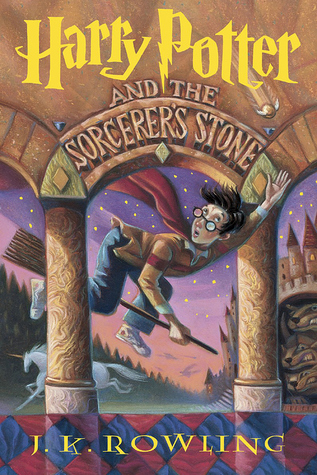
The entire Harry Potter series. Yes, the whole thing. It was immense and it took months. But The Kid is now fully obsessed with HP.


We read both Ramona Forever and Ramona's World this year, finishing up the entire Ramona series.


We also worked on finishing up a full tour of Roald Dahl's fiction this year, a project we started a few years back with The Minpins. I think The Witches is one of the scariest of Dahl's books, and we therefore left it to near the end. DD loved it, though - the visual language in this book is wonderful! And the little boy and his grandmother teaming up so well to work against the witches is fantastic.


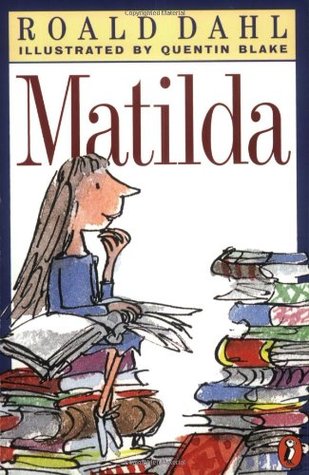
I don't know how this one of Dahl's got left so late! It may be my favorite of the whole bunch. A brilliant little girl with horrendous parents, who eventually finds her way with the help of a lovely librarian and a supportive teacher. Plus, a little bit of magic, which always helps.


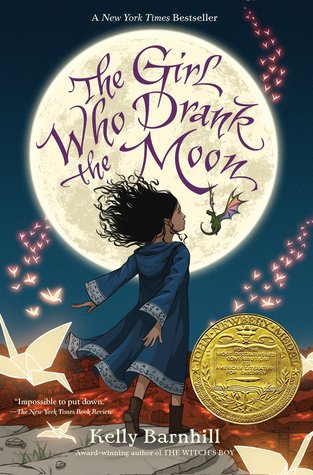
This was an amazing and imaginative story about a girl who was fed a bit too much moonlight as a baby, making her powerfully magical, and the witch, swamp monster, and Perfectly Tiny Dragon who raise her. It's a coming-of-age tale, written for middle grades but appropriate for younger readers who are ready for the themes typical of fantasy books, including grave danger and death. Winner of the 2017 Newbery Medal.


Middle grades book that is appropriate for younger readers who are okay exploring the theme of loss. Newbery Honor Book.

Saturday, April 14, 2018

Planning, Then Throwing It All Out


I’ve been deciding what we’ll do next year. Much of it isn’t difficult, as I’ve leaned more and more unschooly, which means I have to do a lot in the moment, but far less planning. Too bad, really, because planning is a strength of mine.

Except maybe not with this kid. 

She teaches herself. Which is awesome. Really. 

By that, I don’t just mean that she reads the book, answers the questions, and doesn’t need me. I mean she thinks about a concept, comes to logical conclusions, then thinks about that conclusion and thinks about logical conclusions, and so on.

Recently, she was thinking about fractions. Half of 4 is 2. That’s easy. Half of 7 is 3 ½. Also easy. This seems to mean that she can write any number as X/2 and then simplify. Is the same true of other unit factions? Yes. Is the same true of other non-unit fractions? Try out several problems and… yes. Cool, figured that out. How about division? I don’t know exactly how she made the leap here, but she did. Somehow, she knew how to divide fractions without ever having seen it or having been told it. 

And she was correct.

We already use Beast Academy, which is the most difficult curriculum I can find for elementary. And then we hit five chapters in a row with material she had already self-taught. Half a year’s worth of material! I tried to just have her do the starred/challenging questions. She did them. Half a chapter in half an hour, and she thought they were boring and not challenging. 

While figuring out how to move on, I’m readjusting my plans. 

Giftedness doesn’t mean more. It doesn’t mean faster. It doesn’t mean… well, a lot of things. It means different. And I’m finding that even parents of other gifted kids aren’t always the most helpful in navigating these waters.

Onwards, upwards, outwards, and beyond, and all plans be damned!