Some of my most popular posts on the blog are the Building Foundations for Scientific Understanding unit study approach posts. I've been asked a few times why there are no posts for the 3-5 book once we finished the K-2 book. There are two reasons. The first is simply that the prerequisites in the 3-5 book (and the 6-8 book) don't jump around threads nearly as much as the K-2 book, making it much easier to just work your way through each thread from top to bottom. The other reason, however, is that we stopped using a science curriculum.
Don't get me wrong, I still have the BFSU 3-5 and 6-8 books on the shelf. They've been fantastically useful when The Kid asks about a topic and I don't even know how to get started breaking down the concepts for her. I just look up the concept she is asking about, then follow the prerequisites backwards until I can see the path to get from here to there. It gives me ideas on how to do that. It lists books that I can reserve at the library.
But I slowly realized, as our time with BFSU K-2 was coming to an end, that The Kid was more htan ready to lead her own science education. She read the books on her own. She asked to listen to lectures or watch documentaries about science. She started taking things apart to figure out how they worked. She wanted extensive time and depth on particular subjects. And she wanted to go further and deeper than any curriculum was going to take her.
Thursday, June 28, 2018

Monday, June 25, 2018
Hogwarts Battle

But we do totally agree on this game. Harry Potter: Hogwarts Battle is a cooperative game; all players are working together to defeat the villains before the villains can capture a set of locations. You play as a HP character, you cast spells and use magical items in order to attack, you get stunned instead of dying, and everyone wins or loses together. The game is progressive in that when you beat Year 1, you move on to Year 2 the next time you play. If you lose, you replay the year until you win. Each year alters the rules a bit and adds complexity, so it starts very simple and ends up as a fairly complex (and long!) game by Year 7.
The expansion pack, Monster Box of Monsters is also excellent. It's an add-on for after you've beaten the entire base game.
Tuesday, April 24, 2018
Reading List for My 7 Year Old
I didn't do a Literature List this year like I have in past years. I'm choosing not to assign literature, and The Kid is more inclined to choose her own books than read whatever I put in her library bin at this point. But that certainly doesn't mean we didn't read! We had a lot of reading with the Cultural Geography study, we continued to have family read aloud time every night (though we switched to mainly using audiobooks for this), and we listened to audiobooks in the car. So, at the end of the year instead of the beginning, here's the summary:
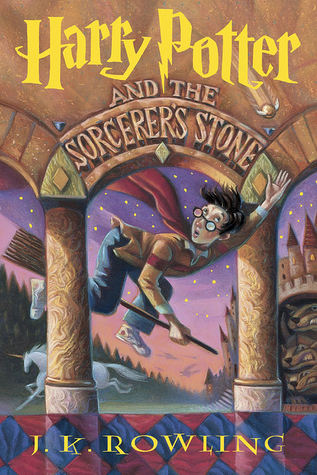
The entire Harry Potter series. Yes, the whole thing. It was immense and it took months. But The Kid is now fully obsessed with HP.

We read both Ramona Forever and Ramona's World this year, finishing up the entire Ramona series.

We also worked on finishing up a full tour of Roald Dahl's fiction this year, a project we started a few years back with The Minpins. I think The Witches is one of the scariest of Dahl's books, and we therefore left it to near the end. DD loved it, though - the visual language in this book is wonderful! And the little boy and his grandmother teaming up so well to work against the witches is fantastic.
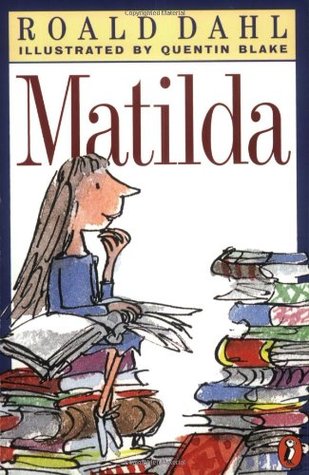
I don't know how this one of Dahl's got left so late! It may be my favorite of the whole bunch. A brilliant little girl with horrendous parents, who eventually finds her way with the help of a lovely librarian and a supportive teacher. Plus, a little bit of magic, which always helps.
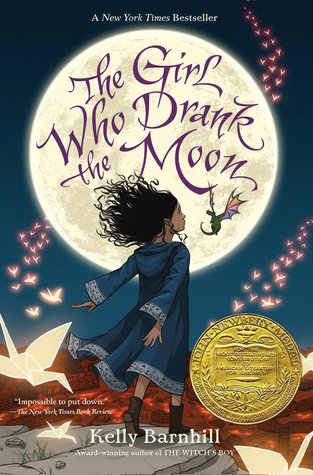
This was an amazing and imaginative story about a girl who was fed a bit too much moonlight as a baby, making her powerfully magical, and the witch, swamp monster, and Perfectly Tiny Dragon who raise her. It's a coming-of-age tale, written for middle grades but appropriate for younger readers who are ready for the themes typical of fantasy books, including grave danger and death. Winner of the 2017 Newbery Medal.

Middle grades book that is appropriate for younger readers who are okay exploring the theme of loss. Newbery Honor Book.
The entire Harry Potter series. Yes, the whole thing. It was immense and it took months. But The Kid is now fully obsessed with HP.
We read both Ramona Forever and Ramona's World this year, finishing up the entire Ramona series.
We also worked on finishing up a full tour of Roald Dahl's fiction this year, a project we started a few years back with The Minpins. I think The Witches is one of the scariest of Dahl's books, and we therefore left it to near the end. DD loved it, though - the visual language in this book is wonderful! And the little boy and his grandmother teaming up so well to work against the witches is fantastic.
I don't know how this one of Dahl's got left so late! It may be my favorite of the whole bunch. A brilliant little girl with horrendous parents, who eventually finds her way with the help of a lovely librarian and a supportive teacher. Plus, a little bit of magic, which always helps.
This was an amazing and imaginative story about a girl who was fed a bit too much moonlight as a baby, making her powerfully magical, and the witch, swamp monster, and Perfectly Tiny Dragon who raise her. It's a coming-of-age tale, written for middle grades but appropriate for younger readers who are ready for the themes typical of fantasy books, including grave danger and death. Winner of the 2017 Newbery Medal.
Middle grades book that is appropriate for younger readers who are okay exploring the theme of loss. Newbery Honor Book.
Saturday, April 14, 2018
Planning, Then Throwing It All Out
I’ve been deciding what we’ll do next year. Much of it isn’t
difficult, as I’ve leaned more and more unschooly, which means I have to do a
lot in the moment, but far less planning. Too bad, really, because planning is
a strength of mine.
Except maybe not with this kid.
She teaches herself. Which is awesome. Really.
By that, I don’t just mean that she reads the book, answers
the questions, and doesn’t need me. I mean she thinks about a concept, comes to
logical conclusions, then thinks about that conclusion and thinks about logical
conclusions, and so on.
Recently, she was thinking about fractions. Half of 4 is 2.
That’s easy. Half of 7 is 3 ½. Also easy. This seems to mean that she can write
any number as X/2 and then simplify. Is the same true of other unit factions?
Yes. Is the same true of other non-unit fractions? Try out several problems and…
yes. Cool, figured that out. How about division? I don’t know exactly how she
made the leap here, but she did. Somehow, she knew how to divide fractions
without ever having seen it or having been told it.
And she was correct.
We already use Beast Academy, which is the most difficult
curriculum I can find for elementary. And then we hit five chapters in a row
with material she had already self-taught. Half a year’s worth of material! I
tried to just have her do the starred/challenging questions. She did them. Half
a chapter in half an hour, and she thought they were boring and not challenging.
While figuring out how to move on, I’m readjusting my plans.
Giftedness doesn’t mean more. It doesn’t mean faster. It
doesn’t mean… well, a lot of things. It means different. And I’m finding that
even parents of other gifted kids aren’t always the most helpful in navigating
these waters.
Onwards, upwards, outwards, and beyond, and all plans be
damned!
Wednesday, January 31, 2018
In Defense of "Too Much Curricula"
I see it all the time - people asking "here's my plan, is it too much?" And, inevitable, many of the answers are a resounding yes. I often disagree, as I think it's the attitude toward schoolwork and education that needs evaluated, not the pile of curricula.
Anyone who has read my yearly resource posts will know that we have a lot of educational materials around here. They fill shelves. Several of them. And they aren't all on the school shelves - they're on my daughter's own bookshelves, they're on the game shelves, they're on the toy shelves...
And that's great for us! We love variety. When I say that I am going to do two language arts programs plus a pile of supplements, a science program plus multiple science units plus xyz else in science, I don't mean that we're using each one of those things every day! Or every week. Or even every month. As a general rule, I don't care when (or, sometimes, if) we finish whatever our "curriculum" is. Sometimes a resource will stay on the shelf for a year or two and then it suddenly fits perfectly with what we want to accomplish. Sometimes we're bored and burnt out (hello, winter!) and want to do something different. Sometimes I see others complaining about how they're dragging through lessons in order to get to the next break, and I'm reaching for something we haven't used in a while and pulling it off the shelf to rejuvenate us.
I love having these options!
 |
| This isn't even all the math we're using this year! |
Tuesday, January 30, 2018
7 Year Old Resources (Second Grade, Take Two!)
It's halfway through the year and I never did post this year's annual school resources post. As I posted earlier, I have no idea what grade to call her, but officially this will be second grade with an independent public charter school. This is the grand list of everything I plan to pull off the shelf at some time this year.
Language Arts
The Kid has had her usual mishmash of extras, including Hoffman Piano Academy, tennis, swimming, ceramics, circus arts, gymnastics, and indoor skydiving. She's changing things up more often than usual, preferring to do just a session at a time then switching off. She's taking art, music, Lego, and a math games class at the charter school.
Language Arts
- Michael Clay Thompson Town level - we completed much of this level last year, but not the writing assignments or the poetry book. We'll go back through this year, filling in what we left out previously.
- Brave Writer - we always use bits and pieces of the lifestyle (especially poetry teas!). I also have Partnership Writing and a few Arrows in waiting.
- NaNoWriMo - The Kid is already excited and planning to write a sequel to a book she wrote two years ago. We'll spend most of October on the workbook before she does the writing in November.
- Editor in Chief grades 3-4 - The Kid is working through this workbook to clean up a few odds and ends that we may have missed along the way.
- Homemade copywork plus calligraphy/creative lettering books - her handwriting has really been catching up this year. By the end of the year, we may be able to start transitioning to less copywork and into some dictation.
- Vocabulary Cartoons - these are fun! I had the spine cut off so that I can hang up one word per day, and they really do seem to stick in her head. This is a great option between levels of Caesar's English.
- Burning Cargo - this is a game-ified typing program that has really worked to improve her fluency.
- Beast Academy - our core. Just starting 4th grade, but will also do the 2nd grade books as they come out.
- Zaccaro's Primary Grade Challenge Math - The Kid has done bits and pieces of this book, which I expect to complete this year.
- Math Kangaroo - DD has decided she would like to compete in Math Kangaroo next spring. To that end, we'll practice using some old tests and a prep book from Borac.
- Hands on Equations
- Math Projects - I found this nifty book on Amazon and it should work to add some more hands-on ideas into our math time
- Kumon 4th grade math workbooks - these have been useful for practicing algorithms after The Kid learns the theory from Beast Academy.
- Math-y books - I Hate Mathematics!, Math for Smarty Pants, Murderous Maths, Sir Cumference
- Athens's Academy Marine Mammals class - eight week class in fall
- Athena's Academy Cryptozoology class - eight week class in spring
- Homemade Cultural Geography course
- Hoemschool Spanish Academy once per week to keep up skills
- Galore Park's So You Really Want to Learn French, book 1 - The Husband is using this as a spine for the first year of introductory French. He's a fluent French speaker, so he gets to teach this in the evenings and weekends, whenever it fits.
The Kid has had her usual mishmash of extras, including Hoffman Piano Academy, tennis, swimming, ceramics, circus arts, gymnastics, and indoor skydiving. She's changing things up more often than usual, preferring to do just a session at a time then switching off. She's taking art, music, Lego, and a math games class at the charter school.
Saturday, May 20, 2017
What grade IS she in, anyway?
We started The Kid in "kindergarten" around her 4th birthday. It made total sense: many of her friends were starting Kindy that school year, she was already working at levels higher than that in most things, and she was quite adamant that she was supposed to be starting, too. Since then, we've promoted her one grade level on each birthday. Therefore, her birthday this Sunday marks the end of second grade and beginning of third.
But...
We're moving to California this summer. Land of public charter schools. With enrichment classes that she can take with other kids! She is so excited about this idea. At this point, she has no desire to go to "regular school", but seeing the same group of kids every week for art or music or a book club or whatever it is that gets offered, while being able to continue homeschooling? Absolutely!
By public school cutoffs, she would just be starting second grade this fall. Neither "second grade" nor "third grade" nor any other grade describes where she's at academically. Her physical writing ability is low, her math ability is high, and her language ability is very high. Socially, she's a bit all over the place as well.
So, for now, she's 7. Or, she will be tomorrow, anyway! We'll enroll her as a second grader this fall. On the blog, I think I'll just start referring to her age.
Subscribe to:
Posts (Atom)